
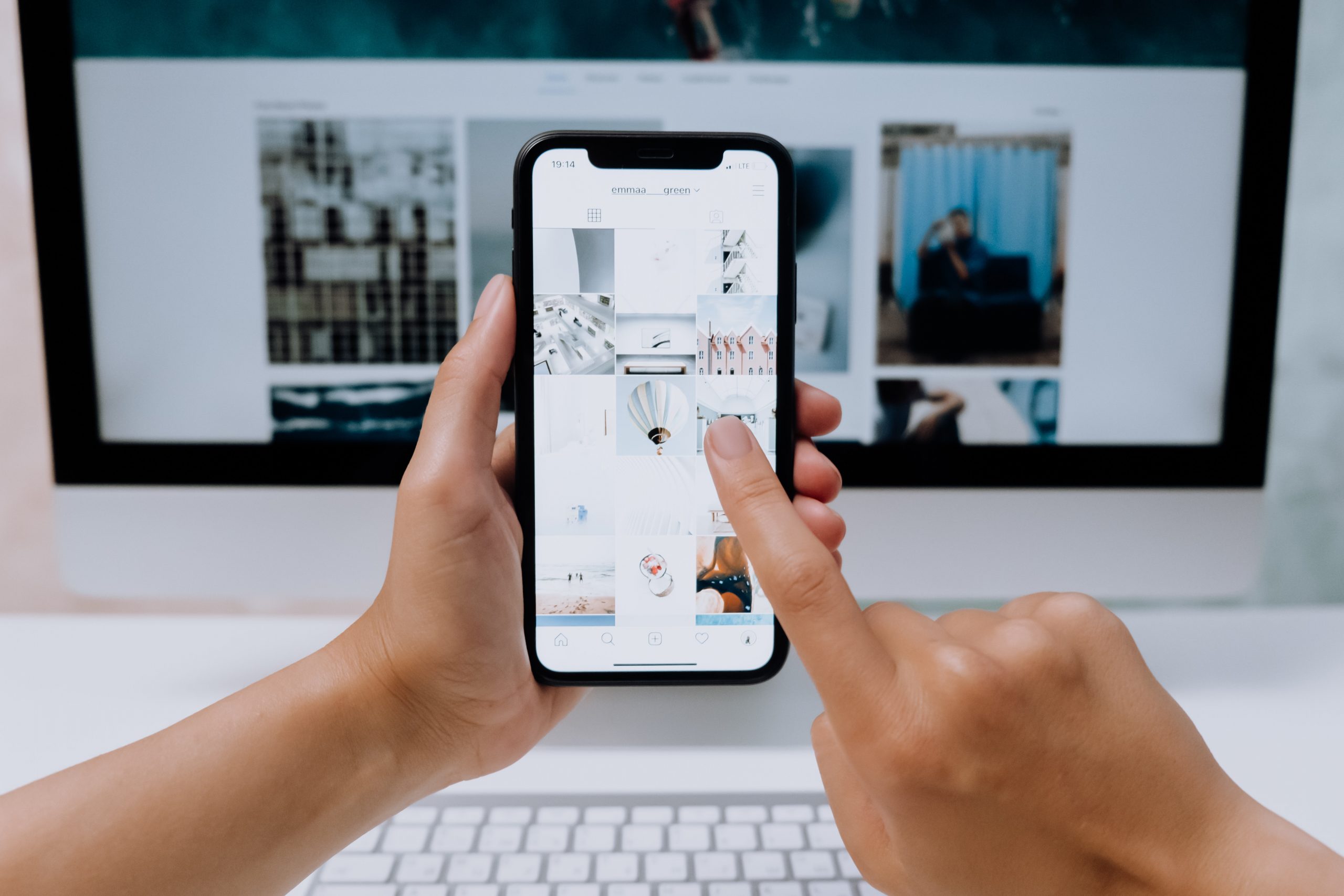
“Swipe up to shop my look!” “Use my code for a great discount!”
Click… the items are in my cart… purchase complete… and I received my confirmation email. Real talk: I’m a spender at heart. And being a natural spender on social media can be a recipe for a budget disaster!
What does social media have to do with spending?
Answer: More than you think. Over decades, we have integrated it into our lives: it is how we connect with people and organizations.
Consequently, companies have taken advantage of this and turned what used to be a networking tool into an easy way to advertise. The average American will spend more than $2,100 a year on impulse purchases (this is up 18% from pre-pandemic times). In addition,40% of Americans admit to purchasing something under the social media influence.
You may follow certain celebrities or influencers on social media. As you’re scrolling through their stories, they often mention products that made their lives easier or “casually” mention clothes that they can’t live without; appropriately, they’ll provide special links or codes. Therefore, it’s incredibly easy to plunk that item in your cart, use Apple Pay, and you can relax while your item is on its way. This seamless shopping experience has made it convenient to give in to impulse shopping. Moreover, with data mining and data analytics, if you search for a product, there will be no doubt that particular item or similar items will make their way onto your feed as an ad.
We can even look at it another way: let’s say you’re casually scrolling through social media content and thought, “If I just had _____, I would be happy.” “Oh, they’re doing _____ I should be doing it too.” These may not be the actual conscious thoughts that play in your mind, but I think it’s safe to say we’ve all experienced some version of this. That, my friends, is FOMO –or “fear of missing out.” And yes, it feeds into spending #GUILTY.
– If I bought these shoes, I would work out more.
– If I bought this face cream, my skin would look so much better.
– If I bought that outfit, I would feel so much better.
I could go on. It’s the comparison and the endless need to chase more – to look, feel, to BE better. But will buying these things truly solve that?
Combating Social Media Splurge
I’d like to highlight certain methods to help me… ahem, we mean, US… be more mindful of shopping while scrolling.
Make a Budget and Allow Yourself to Spend
This is crucial. Creating a budget not only makes us prioritize where our money goes, but it pushes us to be more conscious of our spending. In this process, we can allow “fun money” that permits us to make these purchases. Most importantly though, we must stick to it.
In our budget, both my husband and I have a “monthly allowance” we give ourselves – he may spend his on a round of golf; I spend mine on skincare. Personally, this technique works for us because there is no question or critique on how one spends that allowance.
Unsubscribe
Unsubscribe from email lists or influencers. When you see “FLASH SALE!” “TODAY ONLY!” the sense of urgency is intentionally there to speak to our FOMO. We must realize that these “sales” may be too tempting for us, so clicking that unsubscribe or unfollow button might be necessary.
Bonus: Your inbox will be less cluttered.
Don’t Compare Your Life to Everyone Else’s Highlight Reel
I’m sure you’ve heard this statement before. It’s a tough one, but remember, people tend to put their highlights on social media: the carefully curated, literally filtered snippets of their lives. We are consumers of that content, and we end up telling ourselves stories that we must be better. Be kind to yourself and focus on YOU and your goals.
If you need to, get off of social media. #ISaidWhatISaid
The Takeaway
Most importantly, if we recognize the triggers that cause impulse spending, we can better control our urges.
Brought to you by our friends at BALANCE